

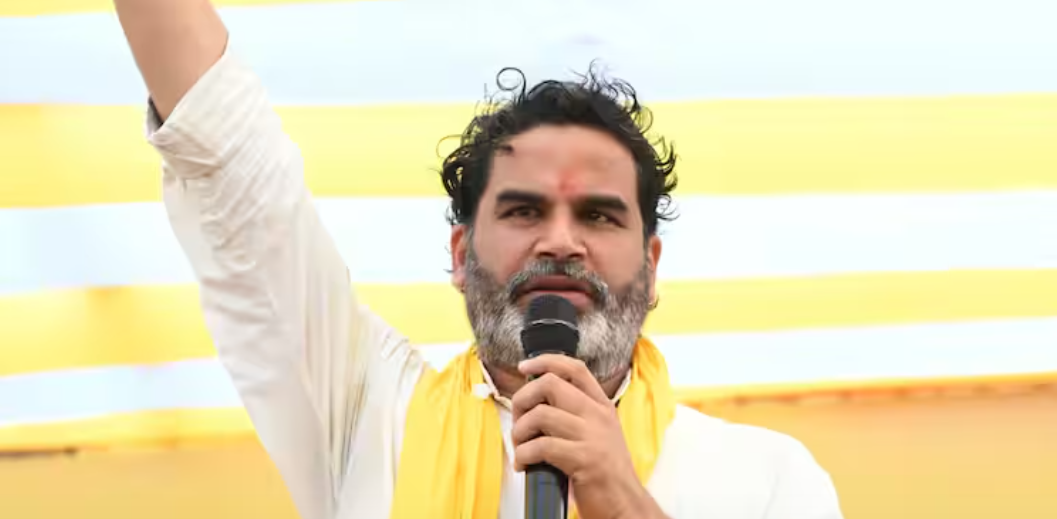
As Bihar heads toward yet another election cycle, the noise of promises, rhetoric, and recycled slogans fills the political atmosphere. Yet amid this familiar din, one figure stands apart for his refusal to simply echo the well-worn narratives: Prashant Kishor, political strategist turned grassroots campaigner and the face of Jan Suraaj (Jan Swarajya). Kishor, widely known for designing some of India’s most successful election campaigns, has in recent years chosen a different path, walking the length and breadth of Bihar, talking to people at the ground level, and crafting a vision of transformation rooted not in slogans but in tangible work.
Traditionally, Bihar’s election campaigns have been dominated by identity politics, caste arithmetic, and last-minute populist pledges. Parties compete not so much on governance performance but on emotional appeals to community loyalties. Kishor’s narrative differs sharply. Through Jan Suraaj, he insists that Bihar’s politics cannot be built only on caste loyalties but must align with governance, development, and accountability. Kishor’s campaign strategy is deliberately slow and grounded. Instead of launching fiery speeches from big stages, he has walked through villages, spent nights in modest homes, and listened to the grievances of ordinary citizens. He speaks of education reforms, better healthcare, opportunities for youth migration, and the revival of Bihar’s economy, issues that have long been sidelined. This narrative matters because it shifts the conversation away from who belongs to which caste, to what kind of Bihar people want to live in. It appeals particularly to the younger generation, who are tired of being forced to migrate for work and education.
This is a starkly different narrative in a state where elections have long been reduced to arithmetic. And unlike leaders who sell promises every five years, Kishor has a track record of delivery. He was the architect of Modi’s 2014 campaign, Nitish Kumar’s 2015 win, Amarinder Singh’s Punjab victory, and Mamata Banerjee’s 2021 sweep. But instead of remaining in the consultancy business, Kishor turned his back on high-profile political deals to build something at home. That makes him stand out as a man of deeds, not just words. Bihar desperately needs this shift. The state has been stuck at the bottom of every development chart, lakhs of its youth migrate every year, schools struggle with crumbling infrastructure, hospitals fail to provide even basic care, and industries are absent. Despite this, elections are fought on who belongs to which caste, not on who can fix Bihar’s future. Kishor’s padyatra changes that conversation. By recording the reality of broken schools, waterlogged roads, and unemployed youth, he forces politics to face Bihar’s truth. More importantly, he knows how to turn ideas into action. The same micro-planning and discipline that helped him manage national campaigns can be applied to Bihar’s governance.
Critics argue strategy is not the same as ruling, but Kishor’s slow, steady approach, building trust step by step, without rushing into power, shows that he understands politics is not just about winning but about creating a durable movement. His presence already unsettles the state’s old guard, Nitish Kumar, Tejashwi Yadav, and others, who have long promised development but delivered only fragments. Kishor, free from dynastic baggage, brings a new kind of credibility. In villages where leaders appear only in election season, Kishor has lived, walked, and listened. That creates trust. It tells people their lives matter. And even if his movement does not win immediately, it has already shifted Bihar’s political imagination.
By centring development, he forces every party to at least pretend to address jobs, schools, and hospitals. That is how change begins, by making people demand more than caste arithmetic. Bihar cannot afford another lost decade. It cannot survive only on migration, remittances, and underdevelopment. It needs leaders who can execute, who can turn promises into schools, speeches into hospitals, and plans into jobs. Kishor is uniquely positioned for that role. His grassroots immersion and proven organizational skills make him the most credible agent of change Bihar has today. In the end, Prashant Kishor represents the politics Bihar has been waiting for, a politics of action, not empty words, a politics built not in studios or rallies but in dusty lanes and crowded villages. Whether or not he wins the next election, he has already redefined what politics in Bihar should look like. And that makes him not just an option, but a necessity for Bihar’s growth.
About the Writer:
Altamash Khan is a contributing journalist who completed his journalism studies at the prestigious Aligarh Muslim University. He has over half a decade of experience writing on a wide range of topics, from politics and social issues to technology and Brands. In addition to his journalism work, he works as a Public Relations and Brand Strategist, helping communicate Brand messages to the World. He would love to hear your thoughts on this issue. Leave a comment below or reach out via the social media handles.