


By. Prof. Mohd Nasir Zamir
Former Dean Fuculty of Commerce,
Aligarh Muslim University, Aligarh, India
Mobile No: +919760884685 Email: mnzcomamu@gmail.com
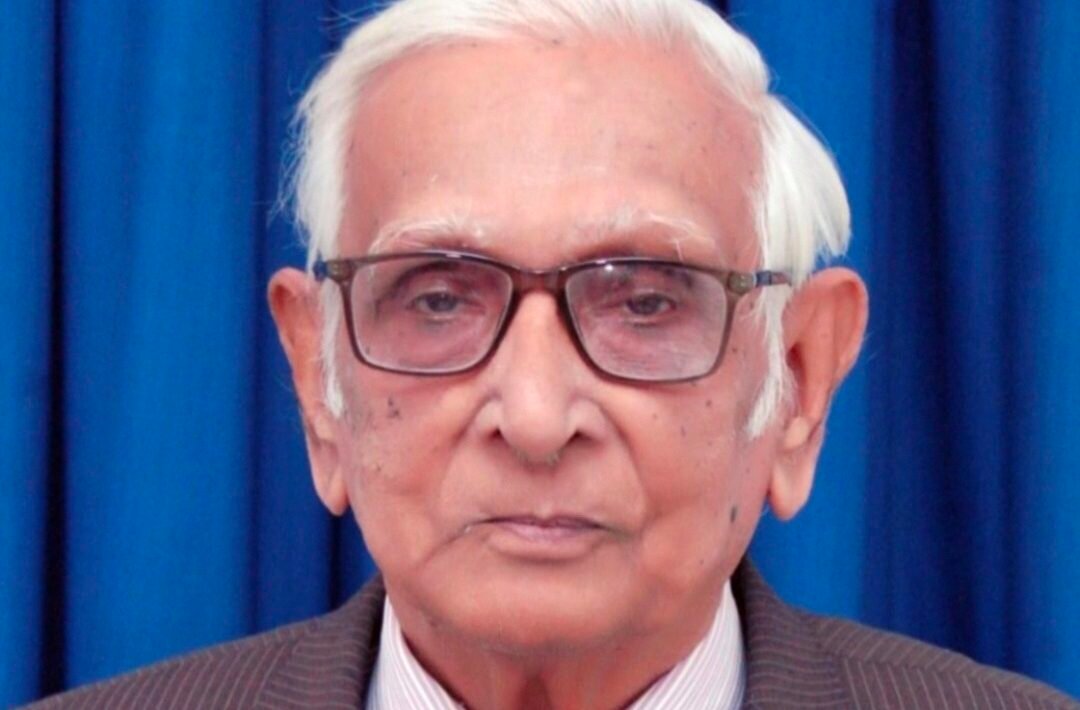
Dr. Mohammed Iqtedar Husain Farooqi, an eminent alumnus of Aligarh Muslim University, represents the finest and magnificent traditions of the Aligarh Movement ,combining modern scientific inquiry with cultural and spiritual understanding.
I have known Dr. Farooqi since my early years at AMU and have long admired his intellectual growth and lifelong commitment to knowledge. As a proud Old Boy of AMU, he carried forward the vision of Sir Syed Ahmad Khan through his pioneering researches, both in Science and Islamic literature. He is an inspiring example of the Aligarh spirit — rational, progressive, and deeply humanistic.
After completing his higher education at AMU, he joined the National Botanical Research Institute (NBRI), Lucknow, where he rose to the position of Deputy Director. Over the decades, Dr. Farooqi became internationally recognized for his pioneering work in Plant Chemistry, as well as his research on plants mentioned in the Holy Qur’an and the Prophetic Traditions (Hadiths).
A prolific scholar, he has authored about 3 dozen books and published more than 125 research papers and over 150 popular articles in English and Urdu in subjects like Biodiversity, Plants of Commercial and Medicinal Value and Islamic Studies. As a matter of fact his writings bridge the worlds of science and faith. His scholarship has earned him recognition across the globe. Having read many of his books and articles in English and Urdu, I have always admired the depth of his knowledge and the clarity with which he connects science to faith. Dr. Farooqi remains a source of pride and inspiration, an embodiment of academic excellence, humility, and devotion to knowledge.
Even in his advanced years, he remains active in writing, contributing to a legacy that will continue to inspire generations of students, scientists, and thinkers
In the following lines I would be detailing some of his works in the field of Plant Chemistry and Islamic Understanding.
Dr. Farooqi successfully applied his knowledge of flora acquired during decades of Scientific Research at NBRI to the study of flora mentioned in Islamic sacred texts.
His decision to base his research career in Lucknow, a major historical center of refined Urdu culture and learning, allowed him to effectively merge the scientific agenda of the Aligarh movement with traditional Islamic scholarship. This identity as a high-ranking scientist and a public intellectual engaged in literary activities has made him highly respected Muslim Scholar
Dr. Farooqi’s scholarly identity rests first and foremost on his foundational career in pure and applied science at the National Botanical Research Institute (NBRI) in Lucknow. This Institution is one of India’s premier institutes dedicated to plant sciences
During his tenure, as a Head of Phytochemistry division, he with his team undertook extensive research under projects financed by various Indian and international agencies. His research focus centered on plant products of commercial and medicinal value, falling squarely within the domain of economic botany.
Dr. Farooqi and his team chemically screened well over a thousand plant species, systematically documenting their properties for industrial and pharmaceutical applicationl. This important scientific work resulted in the publication of approximately over 125 research papers in both national and international scientific journals, firmly establishing his reputation as a leading expert in his field of Galactomannan. Among his published books is the rigorous scientific text, Dictionary of Indian Plant Gums, Resins, Dyes. This publication serves as definitive evidence of his dedication to economic botany, the commercial application of plant resources. Recognition of his applied scientific contributions included the Krishi Award from the Ministry of Agriculture, Government of India—an institutional acknowledgment of the practical value of his research.”
As a scientist and expert in Phytochemistry Dr. Farooqi ensured that his identification of Quranic and Prophetic plants was viewed globally as an objective scientific finding rather than a purely subjective theological interpretation. This fusion of science and Islamic studies brought him international scholarly acclaim he. The successful interdisciplinary nature of Dr. Farooqi’s writing is best seen through an overview of his core published titles, which total around three dozen books. Some major are described below:
Plants of the Quran: Scripture Botany: Identification and Scientific Description of Quranic Flora. ( English, Urdu, Hindi, Arabic, Persian, Bhasha (Indonesia), Bangla Malayalam, Kannada etc )
This book is universally described as the “first authentic work on the subject” (First published in 1989). It provides scientific descriptions, encompassing botanical, chemical, and medicinal properties of the plants mentioned in the Qur’an.
Renowned Islamic Thinker Syed Abul Hasan Ali Nadvi, Rector of Nadva Islamic University, commended the book for its ability to “unravel several knots” in traditional interpretation. Specifically, Nadvi noted that Farooqi’s observations and identifications concerning plants such as Sidrah (Lote tree) and Kafur (Camphor) were of immense help in removing many long-standing confusions. On the scientific side, Dr. S.K. Jain, Former Director of the Botanical Survey of India, formally acknowledged the book as “an important addition of Scripture Botany”. Dr. M.A. Yamani, an eminent Islamic Scholar, Ex Minister of Information and Chairman of the Iqra Foundation, Saudi Arabia, confirmed the international need for the work, asserting that Plants of the Quran has really filled a gap that has been yawning for centuries -useful and comprehensive information- shall remain and forever a unique attempt and a useful accomplishment. Prof. D. M. W. Anderson, Edinburgh University, U.K. ”-originality of thoughts-valuable contribution to the religious/scientific literature. Prof. J. Vassal, Botany Department, Toulouse University, France. ”-a valuable and important sum of knowldge.”
Plants Mentioned in the Traditions of Prophet Muhammed (Sunnah):This authentic work the basis of Tibb-e-Nabvi (Prophetic Medicine). The work provides objective analysis of their medicinal, aromatic, and food properties. Maulana Syed Mohammad Rabey Nadvi Director, Nadva Islamic University, Lucknow, Member, Rabita Al-Aalam Al-Islami says: Dr. Farooqi’s second scholarly attempt in the form of ‘Medicinal Plants in the Traditions of Prophet Muhammad’ is yet another research study of very high standard on those Sayings of the Prophet (SAAS), which mention plants as medicine, food, perfume etc.
Animals Mention in Quran: Prof. Lytton John Musselman, Department of Biological Sciences, Old Dominion University, Norfolk, Virginia 23529-0266, U.S says There is today a strong movement to link environmental concerns with religious practices. In this regard, helpful information on the Animals Mentioned in Quran by Dr. M.I.H. Farooqi is the most timely work. Prof. M. Shamim Jairajpuri, Former Director, Zoological Survey of India, Kolkata, and former Vice Chancellor, Maulana Azad National Urdu University, Hyderabad says: Animals mentioned in the Quran, is indeed a marvelous achievement as it would be a companion volume of his earlier famous book Plants of the Quran, Nick Leech, Noted Journalist, The National Daily, Abu Dhabi, U.A.E. says: Dr. Farooqi is the intellectual product of one of India’s most prestigious Islamic academic institutions, Aligarh Muslim University, as well as being the son of a widely respected Islamic scholar, Al Haj Maulana Abrar Husain Farooqi. Although he remains a ‘humble scientist’, the success of Farooqi’s Quran-andHadith-related publications have led to international recognition..Dr.Farooqi’s latest book about the Animals Mentioned in the Quran would be received as his earlier works
Muslim Societies – Rise and Fall: It is a scholarly analysis of the historical trajectory, achievements, and setbacks of Muslim societies. The book critically examines the rise of Islam, its cultural and scientific zenith, and the subsequent periods of decline, focusing on the importance of knowledge, ijtihad (independent reasoning), and scientific inquiry throughout Muslim history. Saiyid Hamid, IAS (Retrd.). Former Vice-Chancellor, Aligarh Muslim University and Chancellor, Jamia Hamdard, Delhi Says: Dr. Farooqi, produced a very informative and scholarly volume on ‘Muslim Societies: Rise and Fall’. a marvel of selective brevity and analytical subtlety. One sees in this book a scientific temperament coming to terms with faith.
Dictionary of Indian Plant Gums, Resins, Dyes and Related Products: “dictionary puts at your fingertips all the information you need about gums, resins and dyes originating from vegetation. …..a unique effort in that it combines content with utility, helping the scholar and entrepreneur alike. (Indian Express, Feb 13, 2009
Dictionary of Flora and Fauna of Quran and Hadiths,:( Pocket Size): A primary value of the work is its systematic effort to identify and confirm the botanical and zoological names of the plants and animals mentioned in the Qur’an and Hadiths.
Indian Plants of Commercial Value: Dr S.K. Jain, Director (Retd.), Botanical Survey of India, Kolkata, says: very useful book in many ways an abridged version of Sir George Watt (1889-93) six volumes of Dictionary of Economic Products of India. First published in 1908
Plants in Ayurvedic and Unani Medicine:Dr. S.L. Kapur: Deputy Director, Head Taxonomy Div. NBRI: Very Useful study, provide basic information of correct botanical identities and chemical compositions of those Medicinal Plants which have assume importance not only in Ayurveda and Unani system of Medicine but also in Allopathic Medicine.
Indian Legumes of Commercial Value: Dr. S.K. Jain Says : Lagumes are undoubtedly the only group of plants on this earth which provide almost all major categories of products required by man and animals for satisfying their hunger, curing their ailments providing shelter and other objects of their daily need. Without Legumes survival of humankind is not possible
The peak of his international recognition came in the form of the Sultan Qaboos Award. The Ruler of Oman, Sultan Qaboos bin Said, honored Dr. Farooqi with an award of US$ 25,000 (approximately 12 lakh rupees), specifically in recognition of his achievements in writing Plants of the Quran and Medicinal Plants in the Traditions of Prophet Mohammad. This recognition, received around early 2011, holds profound significance. He was specifically noted as the “first Indian Scientist to receive this Honour from Oman King”. The award represents a formal royal endorsement from a prominent Gulf state,
Based on his work on Quranic and Prophetic Plants, the United Nations Educational, Scientific and Cultural Organization (UNESCO) approved a Multimillion Dollars Project dedicated to the establishment of Quranic Botanical Gardens (QBG) in Islamic countries, particularly across the Middle East. His role in this initiative was operational as well as consultative. Dr. Farooqi was associated with the UNESCO project and served as an Expert Member of the UNESCO Team responsible for establishing these gardens.
Dr. Farooqi consistently championed the need to integrate scientific knowledge into vernacular discourse. He received the Salim Ali Award from the U.P. Urdu Academy, specifically recognizing his successful efforts to popularize science through the Urdu language. Several State academies like Bihar, West Bengal also gave such awards. AFMI (US) Award for Excellence, Rotarian/Social Service awards etc.
He served as the Secretary for two key intellectual societies: the Sir Syed Scientific Society and the Urdu Scientific Society.
Dr. Farooqi utilized his platform as a public intellectual to write extensively on Islamic History and critical “social problems facing the community”. He provided insightful commentary on historical reform efforts, for instance, drawing clear parallels between the work of Sir Syed Ahmad Khan (the founder of AMU) and Raja Ram Mohan Roy (the architect of the Bengal Renaissance) arguing that both reformers advocated for the introduction of modern Western education, science, and technology.
Dr. Farooqi’s career stands as a living evidence that scientific inquiry and religious identity can not only coexist but also enrich one another. His numerous Lectures and talks on “Science and Islam” at institutions across India , Qatar, Egypt, UAE, Science Academies of U.K., France and Germany etc. are a testimony of his interdisciplinary views